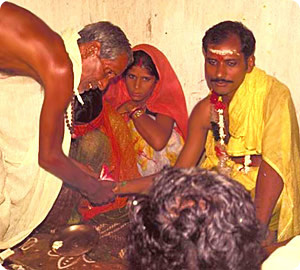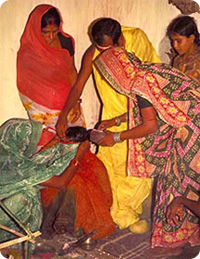
Showing posts with label Maithil Brahmin Wedding Ceremony. Show all posts

MAITHIL BRAHMIN POST WEDDING RITUALS


Maithil Brahmins belong to the lower regions of the Himalaya Mountains and the River Ganges in the North-Eastern India. The highest ranking caste, wedding ceremonies in Maithil Brahmins is celebrated with a high spirit and great pomp and show. Enthusiasm and extravaganza mark the wedding traditionsand rituals. 

Apart from the customs and ceremonies that are performed on the actual day of marriage, there are a number of rites practiced before and after the D-Day. Post wedding ceremonies in Maithil Brahmins have an important significance and implication. 

The customs usually are wishes that the grooms family perform for the long life, fertility and prosperity for the newly weds. In the following lines, we have provided detailed information about the traditional post wedding rituals, customs and ceremonies that are performed in a Maithil Brahmin marriage.

Post-Wedding Maithil Brahmin Rituals

Sindurdan Custom
The completion of saat pheras is followed by the performance of Sindurdan custom. As a part of this custom, the husband applies sindur or vermilion on his wife's forehead. Sindur remains in the woman's hair parting, till her husband lives. Sindur symbolizes her auspicious wifehood.

Durbakschat Ceremony
Durbakshat ceremony is performed by the Brahmin men, in which they sprinkle husked rice on the newly wedded couple. This gesture represents their heartiest wishes for the fertility and prosperity for the newly weds. This ceremony takes place either on the same day as marriage or on the next day.

Chumaon Tradition
In the Chumaon tradition, the women wave a tray containing ethnic objects over the couple. Marriage rituals take place at the bride's house for about four days. Thereafter, the couple leaves for their home, where new life is awaiting them.

MAITHIL BRAHMIN WEDDING RITUALS


Wedding is a grand affair in the Maithil Brahmin caste. It is believed that for a Maithil Brahmin, Kanyadan or the gift of a girl in marriage is equal to a gift to a god. Having their own cultural and social traditions, the marriage ceremonies involve several steps or rituals that start from the pre-wedding period and extend till the post wedding period. Planning, hectic preparations and organizations mark the period before the wedding day. 


In the Maithil Brahmin caste, there are a number of rites, traditions and rituals that are performed on the wedding day that involve not only the bride and the groom, but also their families. Apart from them, the purohit or the priest also plays a major role in a Maithil Brahmin wedding. In the following lines, we have provided detailed information about the traditional Maithil Brahmin wedding rituals and ceremonies performed on the actual day ofmarriage.

Maithil Brahmin Wedding Customs

Wedding Ceremony
For the wedding ceremony, the bridegroom and bride are made to sit together in front of the sacred fire. Thereafter, Lord Agni is called upon after worshipping, to witness the marriage by lighting the sacred flame that is essentially made of sandalwood and ghee.

Kanyadaan Tradition
In the Kanyadaan tradition, the bride's father places his daughter's hand in the hand of the bridegroom and requests him to take her responsibility. The bride's father gives away his daughter with the chanting of Vedic mantras. The priest performs all the wedding rites and rituals.

Saptapadi Custom
As a part of Saptapadi custom, the bride and groom are asked to take seven rounds around the holy fire. These are the first few steps that the couple takes together to mark the beginning of their married life.

MAITHIL BRAHMIN PRE WEDDING RITUALS


In the Maithil Brahmin caste, wedding is an auspicious occasion and is marked by utmost fervor and enthusiasm. Just like the other festivities, such as Holi or Diwali, a wedding is an extravagant affair and is constituted by a traditional bent of mind. The whole process starts as soon as the girl in a family becomes young enough to get married. 

Traditionally, the father looks for a good match for his daughter, while the groom's family waits for an offer. Mostly, the boy's family chosen is of the same caste as that of the girl's family, but with a slightly higher status.

 Once the horoscopes are matched and the wedding is fixed, preparations and organization for the marriage begins. Customs and rituals performed are not just limited to the actual D-Day. There are a number of traditions that are followed before the wedding day as well. To get detailed information about the prewedding Maithil Brahmin rituals and ceremonies, explore through the following lines.

Maithil Brahmin Pre Wedding Customs

Siddhant Tradition
In the Siddhant tradition, the panjikar, as in the registrar, sees the panjis of both the families, before the commencement of wedding ceremony. As a part of this custom, the panjikar accepts the wedding of the prospective bride and groom, on the tar patra. The day for marriage is fixed according to the Maithil panchang (lunar calendar).

Arrival Of The Groom
On the wedding day, the ladies wait at the compound of the house to welcome the bridegroom, as he arrives. Beautifully decorated kalash and an ox yoke are also placed there. As the groom arrives, he is given a warm welcome by the women. Thereafter, the bride's assistant known as the vidkari, comes forward and welcomes him with sandal paste. This is followed by the groom's ceremonial bath after which he wears his dhoti and the jenui (sacred thread).

The bride then seeks the blessings of the washer man's wife, who is believed to always remain suhagin. It is said that washer man's wife never becomes widow, as she always dies before her husband. As a part of this custom, some yoghurt is taken and touched to the hair of the washerwoman. The same is given to the bride to eat.

Kul Devi Shrine
The couple is then led to the Kul Devi shrine. This is the only chance that the bridegroom gets to enter the shrine of the lineage goddess of the bride's father.

Gauri Puja
Gauri puja is performed, in which the bride offers prayers to Goddess Gauri and thanks her for giving her such a wonderful husband. Betel nut placed on the head of a clay elephant represents the goddess.

Otangar Custom
In the Otangar custom, eight Brahmin men crush some rice, which symbolizes that marriage is the combining of "seed" or bloodlines connecting patrilineages in new ways. The bridegroom also participates in this ritual.

Nana Yogin Ceremony
Nana yogin also called grandmother yogi is a custom that is performed by ladies. As a part of this custom, things like flower, betel leaves etc are placed on a tray, which are used for doing the traditional Aarti of the bridegroom. While doing Aarti, the women chant these words, "Take your yoga and give us wealth.

Archive